

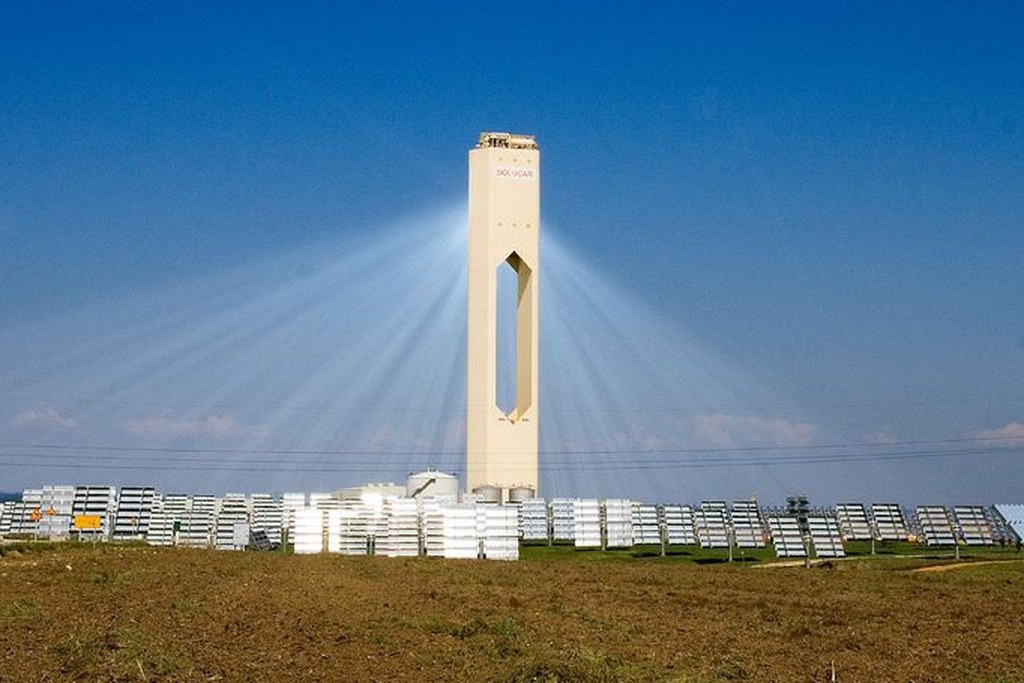
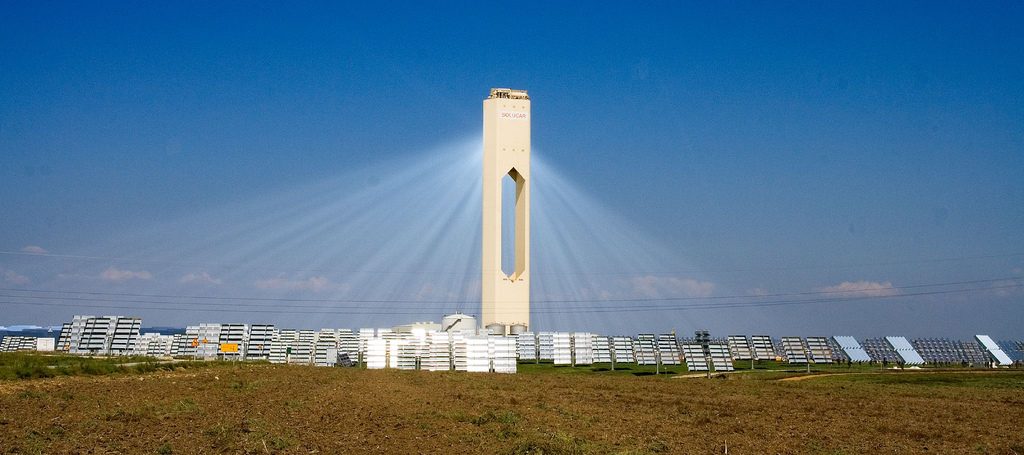
Concentrated Solar Power (CSP) is a way of generating electricity from the sun that works very differently from the familiar photovoltaic (PV) panels. Instead of turning sunlight directly into electricity, CSP first uses it to produce heat and then converts that heat into power — which is why it is also known as Concentrated Solar Thermal (CST).
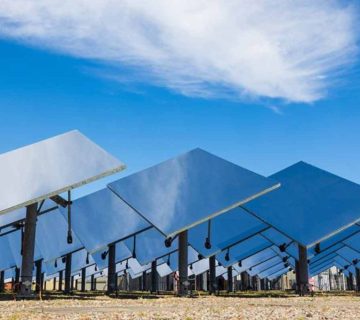
In this technology, an array of mirrors — also called solar collectors — focuses sunlight onto a single point or line to create very high temperatures at a central receiver.
How does CSP work?
The mirrors concentrate sunlight onto a receiver placed at the focal point of the system. This concentrated light heats a working fluid — such as a special thermal oil or molten salt — to several hundred degrees. The hot fluid then turns water into high-pressure steam, and the steam spins a turbine connected to a generator, producing electricity. In effect, CSP replaces the fuel-burning boiler of a conventional power plant with the heat of the sun.
The key advantage: energy storage
CSP’s most important advantage over PV is the ability to store heat. By keeping the collected heat in molten-salt tanks, a CSP plant can continue generating electricity even after sunset or during cloudy hours — something ordinary solar panels cannot do on their own. For this reason, CSP is usually seen as a complement to photovoltaics rather than a direct competitor.
Types and applications
Common CSP designs include the Parabolic Trough, the Solar Tower (power tower), the Dish, and the Linear Fresnel. Because the technology needs strong, direct sunlight, it is an excellent option for sunny, desert regions — like many parts of Iran — to produce clean electricity on a large scale.
Concentrated solar power (CSP) is one way of generating electricity from the sun that differs fundamentally from common photovoltaic panels. This technology does not convert sunlight directly into electricity; it first produces heat from it and then converts that heat into power. For this reason it is also called "concentrated solar thermal" or CST.
In this technology, a set of mirrors — also called solar collectors — concentrates sunlight on a focal point or line to create a very high temperature in a central receiver.
How does CSP work?
The mirrors concentrate sunlight onto a receiver placed at the focal point of the system. This concentrated light heats a working fluid — such as a special thermal oil or molten salt — to several hundred degrees. The hot fluid then turns water into high-pressure steam, and the steam spins a turbine connected to a generator, producing electricity. In effect, CSP replaces the fuel-burning boiler of a conventional power plant with the heat of the sun.
Key advantage: energy storage
CSP's most important advantage over photovoltaics is the ability to store heat. By storing the generated heat in molten-salt tanks, the plant can keep producing electricity even after sunset or during cloudy hours; something ordinary solar panels alone cannot do. For this reason CSP is seen more as a complement to photovoltaics than a direct competitor.
Types and applications
Common CSP types include parabolic trough, solar tower, dish and linear Fresnel. Since this technology needs strong, direct sunlight, it is a very suitable option for large-scale clean power generation in sunny, desert regions — such as many parts of Iran.
Image: PS10 solar tower, Seville — photo: afloresm, CC BY 2.0 license

 and How Does It Work?)