
What is solar energy?
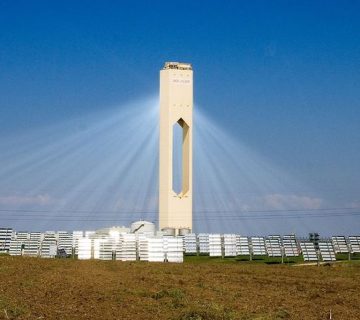
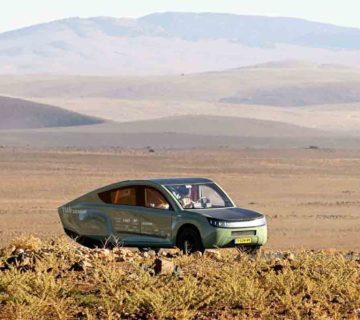
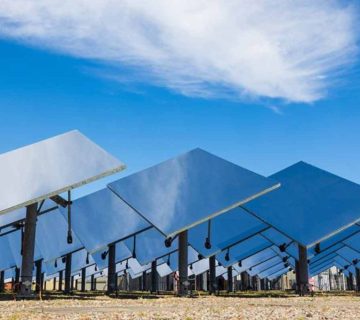
Solar energy is a form of clean energy obtained from the sun's radiation, and it can be used to generate electricity or heat.
For example, solar panels convert sunlight into electricity and solar water heaters are used to heat water.
Why do we need solar panels?
Given the current energy situation in Iran, having a reliable alternative source has become very important. In the past, most people relied on generators for power, but today the Solar panel has become one of the best options.
This system needs no fuel, has low maintenance costs, requires little repair and, most importantly, silently operates.
Benefits of installing solar panels for your home or workplace
Today, solar panels can be used for many residential and commercial applications. In the past, solar systems had limitations that made them unsuitable for every use, but most of those problems have now been resolved and the technology has become a practical, reliable option.
Is your home or workplace suitable for solar panel installation?
Installation requirements
For a solar panel to perform at its best, it must be directly exposed to sunlight and, as far as possible, no shade should fall on it.
meaning that during the day no shadow from a tree, wall, chimney or any other obstacle should fall on the panels.
The space required also depends on the number of panels. On average, for each panel roughly 2.5 m² of space can be allowed.
Panels can be installed both on a Pitched roof and on a Flat surface alike. Given Iran's geographic location, the best installation orientation is usually South-facing.
Key requirements for solar panel installation
- The panel must be installed on a dedicated solar mounting structure designed for it.
- The structure must be able to bear the weight of the panels.
- The suitable panel tilt angle from horizontal is usually 30 to 35 degrees.
- The lowest part of the panel should preferably be at least one meter above ground level for clearance.
- The installation site must be sturdy, secure and reliable.
- The panel surface must face South when installed.
Solar irradiance and generation potential in Iran
Iran has very favorable conditions in terms of solar irradiance, and solar energy can be used productively in almost every region of the country.
Even some northern regions of Iran, despite lower irradiance than other parts of the country, still — compared with some European cities such as Munich, Germany — receive more sunlight.
On average, in Iran about 5.5 peak sun hours per day are assumed. Of course, this figure is not fixed; in summer it may reach up to 9 hours and in winter drop to around 3 hours per day.
Possible obstacles when installing solar panels
When choosing the installation site, all possible obstacles must be examined carefully.
For example, if there is a tree near the installation site, you must make sure that at no hour of the day does even a branch of it cast shade on the panel. Shade does not shut the panel down completely, but reduces power generation efficiency.
Another important point is to consider the possibility of construction on neighboring buildings, as it could shade the panels in the future.
Main components of a solar system
1) Solar panels
A solar panel is made of silicon cells covered with a tough glass layer that protects the internal parts.
There is also usually an aluminum frame around the panel that maintains its strength over the years of operation.
2) Mounts, frame and mounting structure
The solar mounting structure holds the panels and must be resistant to wind, rain, snow and corrosion alike.
The quality of this part plays a very important role in the durability and proper performance of the whole system.
Structures can be installed on the ground using driven piles or concrete footings — and on pitched roofs, usually rail systems are used.
3) Sunverter (solar inverter)
The solar inverter is the device that manages and conditions the electricity generated by the solar panels and prepares it for use or for storage in the battery.
This component is one of the important parts of a solar system.
4) Cables and connections
Solar cable, connectors, clamps, the switchboard and other ancillary equipment are selected according to the system type and installation site.
The quality of this equipment weighs heavily on safety and energy-loss reduction alike.
5) Batteries
If your system is of the energy-storage type, the battery is responsible for storing the generated electricity.
At present, two types of battery are most commonly used:
- Sealed lead-acid battery: has a shorter life, typically around 3 to 4 years.
- Lithium battery: a newer and more widely used option that typically has at least 16 years of service life.
Of course, the choice of battery type depends on project conditions and system design.
How the components of a solar system are connected
When installing a solar system, the order in which equipment is connected matters a lot. The process usually goes like this:
- First, the batteries are connected to each other in a series or parallel arrangement.
- Then the connection between the battery and the solar inverter is made.
- If the battery is lithium-based, the BMS is also activated for better battery management.
- In the next step, the panels are connected to each other according to the specified configuration and finally connected to the solar inverter.
- Finally, the system's input and output switchboard is installed.
System design and sizing
Electricity consumption calculation
To design a solar system correctly, you first need to identify all electrical appliances and how many hours each one is used.
If you have an electricity bill, you can use its data for a more accurate consumption estimate.
Otherwise, a list of electrical appliances and their daily usage time must be prepared.
Determining the required power
Once each appliance's power and usage time are known, the total energy consumption must be calculated.
To do this, we multiply each appliance's power by its hours of use and finally add them all up.
Selecting the number of panels and the series/parallel configuration
The number of panels required is determined from electricity consumption and useful sunshine hours.
But determining the exact series or parallel arrangement is highly specialized and must take into account factors such as:
- Type of use
- Battery capacity
- Number of batteries
- Minimum required charge
- Installation site conditions
- Equipment technical information
be carried out. For this reason, it is better to have this part done under the supervision of a specialist.
Energy loss in the system
In solar systems, factors such as heat, cable quality and shading can cause a drop in efficiency.
Contrary to what many people think, high heat is not always good for the system and can reduce efficiency.
For this reason, cables should be kept out of direct sunlight as far as possible.
For an initial capacity estimate, use the Solar Power Plant Calculator. To assess the installation site conditions and for detailed design, refer to Energy and solar engineering services for details.
Installation permits and regulations
Personal use
If your goal is to use solar power for personal consumption, you usually do not need any special permit.
Selling electricity to the grid
If you want to sell the generated electricity to the utility, you must obtain a permit from the renewable energy department of the power distribution company.
After the system is installed, a final inspection is carried out and, if approved, connection to the grid becomes possible.
Installation site preparation
Cleaning the site
The surface on which the panel is to be installed for a long period must be clear of any extra objects, dust and dirt.
Structural reinforcement
If necessary, the installation site must be reinforced so it can properly bear the weight of the structure and panels.
The mounting method differs by surface type; for example, concrete or driven-pile footings are used on the ground, and rail systems on pitched roofs.
Inspection, testing and commissioning
Final check of connections
Before commissioning, all connections must be checked thoroughly:
- Cables should not hang loose behind the panel.
- Busbar connections must be tight.
- Battery and sunverter connections must be free of looseness.
- To connect the panels, a suitable connector must be used.
Voltage and current test
Before connecting any panel to the rest of the equipment, its open-circuit voltage must be measured and compared with the value stated in the datasheet.
Under suitable conditions, especially around noon, this figure should be close to the stated value.
The same check must be carried out separately for the batteries.
Periodic performance check
A solar panel usually has a long life and can last more than 40 years in operation.
In addition, for up to about 25 years they often carry a performance warranty on efficiency.
It is best to check their open-circuit voltage and operating voltage once a year to make sure they are working properly.
System monitoring
In solar systems, operating status can be checked in several ways:
- via the display on the sunverter or inverter
- via the dedicated app on a phone or laptop
Safety notes and warnings
Risk of working at height
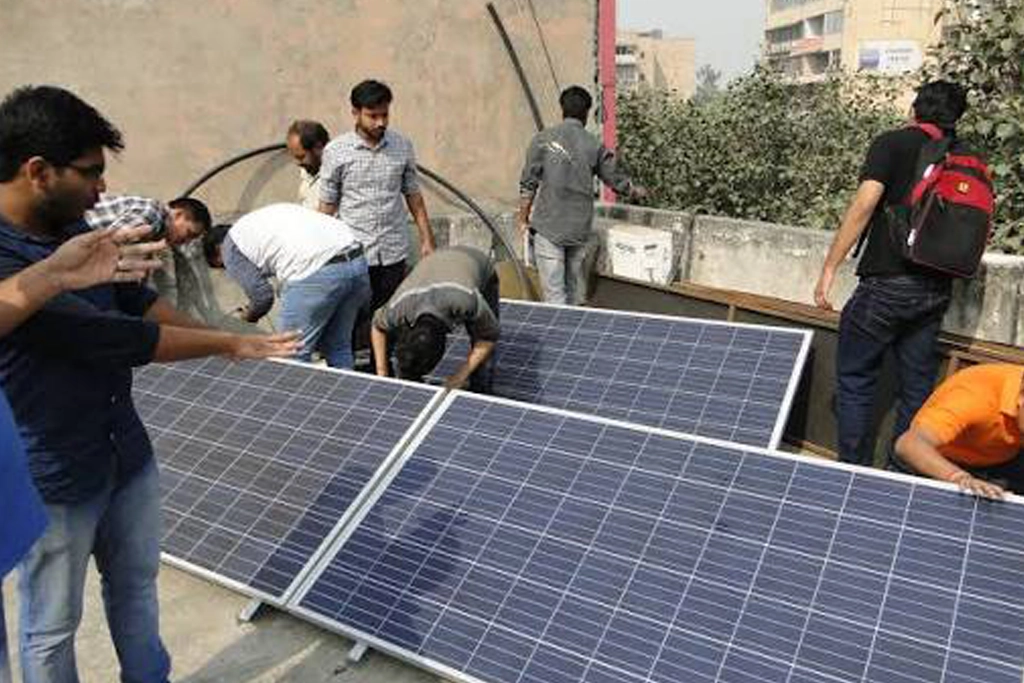
Since solar panels are usually installed on roofs, working at height is one of the most important parts of project execution.
During installation, people must be protected and panels must be prevented from falling or being damaged.
If a panel falls from a height, its front glass is usually damaged. Such a panel may still work, but its efficiency will drop.
Factors that cause panel breakage
- Falling from height
- Severe impact from a heavy or sharp object
- Sudden temperature change, such as very hot or very cold water hitting the panel surface
Electrical safety
Whenever you intend to inspect or repair part of the system, first cut the power to that section at the switchboard to eliminate the risk of electric shock.
Using insulated tools is also very important.
Environmental hazards
Although solar mounting structures are designed to withstand wind, rain and snow, during heavy snowfall it is better to clear the panel surfaces so that no extra load is placed on the structure and power generation does not drop.
Maintenance and servicing after installation
Cleaning the panels
A clean panel surface is essential for better absorption of sunlight.
Depending on environmental conditions and the amount of dust and pollution in the area, the panels need to be washed every so often with clean water and suitable tools.
Checking connections and fasteners
It is best, once every 6 months, to check the connections, bolts and the various parts of the system to make sure everything is as tight and safe as on day one.
System performance control
Besides the annual voltage checks, the overall performance of the system should also be monitored.
For example, if the system was installed in summer, you may notice a slight difference in output in winter due to fewer useful sunlight hours.
Of course, if the system has been designed properly, these changes do not cause serious problems.
Repair and parts replacement
A solar panel has no moving parts, which is why its likelihood of failure is low.
Lithium batteries also usually perform stably.
Among the main equipment, the solar inverter is more exposed to wear than other parts and may need repair or replacement over time.
The typical lifespan of these units is usually at least 5 years.
Frequently asked questions
Can I do the installation myself?
If you have sufficient knowledge and experience with solar systems, you can install it yourself.
But if you lack the necessary expertise, it is better to get help from a specialist to avoid errors, energy losses and safety problems.
How long does system installation take?
Installing the panels and batteries usually does not take long, but fabricating and erecting the structure can take some time.
For a residential project, in most cases less than a week is needed.
Industrial projects take different amounts of time depending on their scale and conditions.
What is the approximate cost of each part?
The final cost depends on the type of equipment, the quantity and the installation conditions.
In addition to the equipment price, the following costs should also be considered:
- Equipment shipping cost
- Installation cost
- Cost of materials and accessories needed for installation
What is the useful life of the panels?
Solar panels usually have about 25 years of guaranteed service life — but in practice they can also last up to about 40 years in operation.
What guarantee is there for electricity generation?
Confidence in adequate electricity generation depends largely on the quality of system design and installation and also the expertise of the installation company.
If the design is done correctly and the system is sized to the consumer's needs, the required electricity can be expected to be supplied with good stability.
In some projects, the system is designed with more capacity than currently needed so that it still copes if consumption grows in the future, and can even be expanded.