

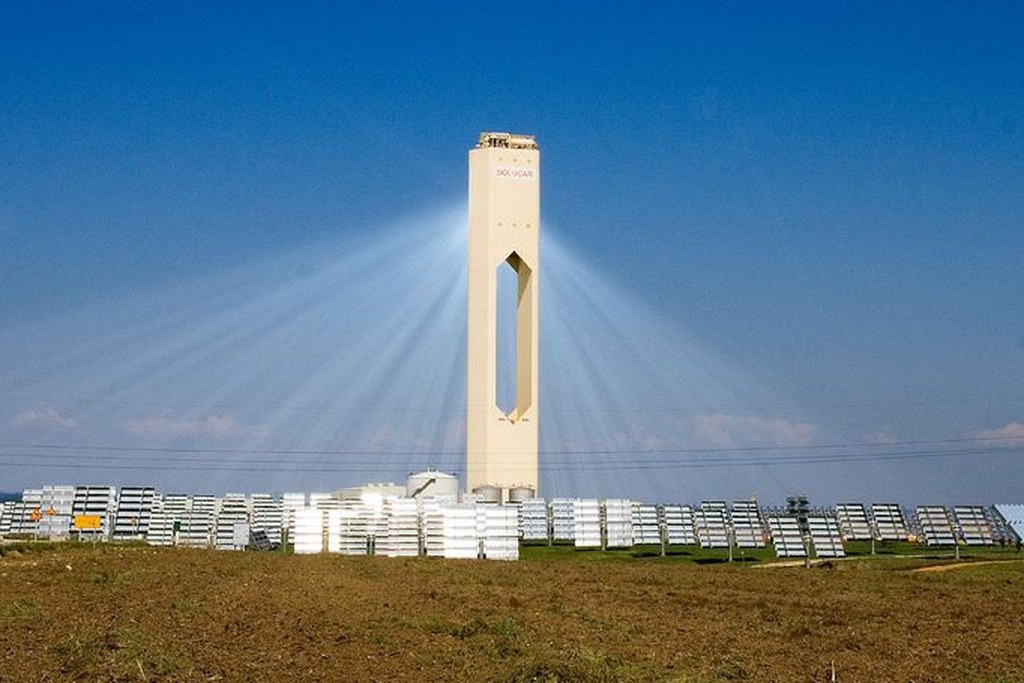
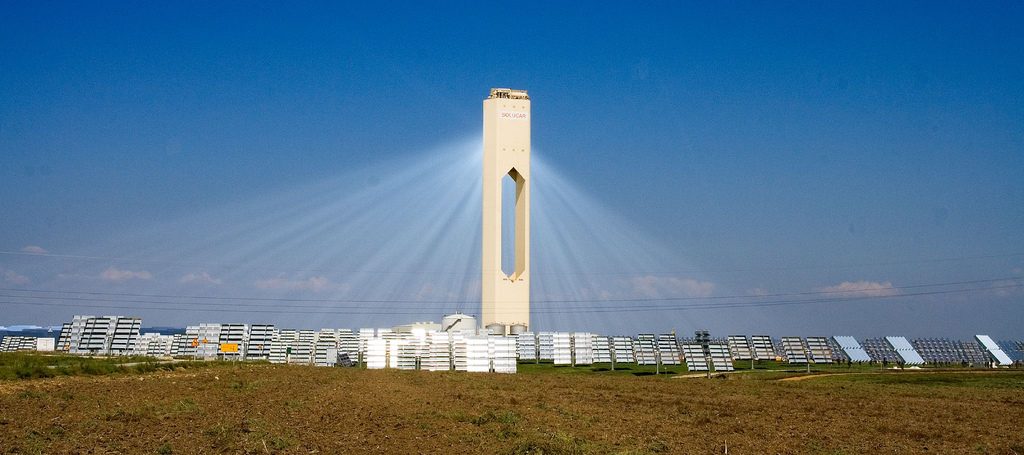
Concentrated Solar Power (CSP) is a way of generating electricity from the sun that works very differently from the familiar photovoltaic (PV) panels. Instead of turning sunlight directly into electricity, CSP first uses it to produce heat and then converts that heat into power — which is why it is also known as Concentrated Solar Thermal (CST).
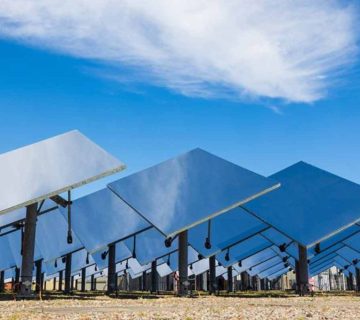
In this technology, an array of mirrors — also called solar collectors — focuses sunlight onto a single point or line to create very high temperatures at a central receiver.
How does CSP work?
The mirrors concentrate sunlight onto a receiver placed at the focal point of the system. This concentrated light heats a working fluid — such as a special thermal oil or molten salt — to several hundred degrees. The hot fluid then turns water into high-pressure steam, and the steam spins a turbine connected to a generator, producing electricity. In effect, CSP replaces the fuel-burning boiler of a conventional power plant with the heat of the sun.
The key advantage: energy storage
CSP’s most important advantage over PV is the ability to store heat. By keeping the collected heat in molten-salt tanks, a CSP plant can continue generating electricity even after sunset or during cloudy hours — something ordinary solar panels cannot do on their own. For this reason, CSP is usually seen as a complement to photovoltaics rather than a direct competitor.
Types and applications
Common CSP designs include the Parabolic Trough, the Solar Tower (power tower), the Dish, and the Linear Fresnel. Because the technology needs strong, direct sunlight, it is an excellent option for sunny, desert regions — like many parts of Iran — to produce clean electricity on a large scale.
الطاقة الشمسية المركّزة (CSP) إحدى طرق توليد الكهرباء من الشمس، وتختلف اختلافاً جوهرياً عن الألواح الكهروضوئية الشائعة. فهذه التقنية لا تحوّل ضوء الشمس مباشرة إلى كهرباء؛ بل تُنتج منه الحرارة أولاً ثم تحوّل هذه الحرارة إلى كهرباء. ولهذا تُسمى أيضاً «الطاقة الشمسية الحرارية المركّزة» أو CST.
في هذه التقنية، تركّز مجموعة من المرايا — التي تُسمى أيضاً المجمّعات الشمسية — ضوء الشمس على نقطة أو خط بؤري لتوليد درجة حرارة عالية جداً في مستقبِل مركزي.
كيف تعمل CSP؟
تركّز المرايا ضوء الشمس على مستقبِل يقع في بؤرة النظام. ويسخّن هذا الضوء المركّز مائعاً وسيطاً — مثل زيت حراري خاص أو ملح مصهور — إلى عدة مئات من الدرجات. ثم تحوّل حرارة هذا المائع الماء إلى بخار عالي الضغط، ويدير البخار توربيناً متصلاً بمولّد لإنتاج الكهرباء. وفي الواقع، تستبدل CSP غلاية حرق الوقود في المحطة التقليدية بحرارة الشمس.
الميزة الرئيسية: تخزين الطاقة
أهم ميزة لتقنية CSP مقارنة بالكهروضوئية هي إمكانية تخزين الحرارة. فبتخزين الحرارة المتولدة في خزانات الملح المنصهر، تستطيع المحطة مواصلة إنتاج الكهرباء حتى بعد غروب الشمس أو في ساعات الغيوم؛ وهي ميزة تفتقر إليها الألواح الشمسية التقليدية وحدها. ولهذا تُعدّ CSP مكمّلة للكهروضوئية أكثر منها منافساً مباشراً لها.
الأنواع والاستخدامات
تشمل الأنواع الشائعة لـ CSP: القطع المكافئ الخطي (Parabolic Trough)، والبرج الشمسي (Solar Tower)، والطبقي (Dish)، وفرينل الخطي (Linear Fresnel). ولأن هذه التقنية تحتاج إلى إشعاع شمسي مباشر وقوي، فهي تُعد خياراً ممتازاً لتوليد الكهرباء النظيفة على نطاق واسع في المناطق المشمسة والصحراوية — مثل كثير من مناطق إيران.
الصورة: البرج الشمسي PS10، إشبيلية — تصوير: afloresm، ترخيص CC BY 2.0
 وكيف تعمل؟)